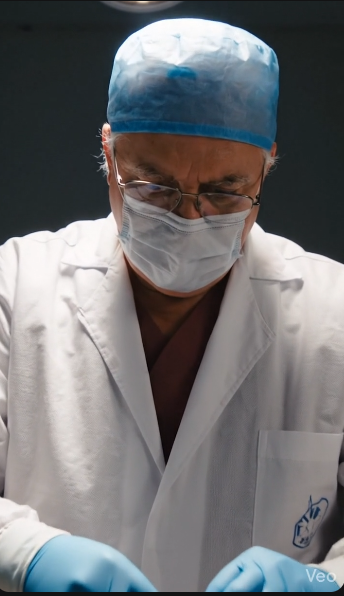
At Clínica Realize Odontologia Avançada, in Campinas, we see both private patients and patients with a range of dental insurance plans. During the consultation, we analyze your plan's coverage and explain exactly which steps are part of the insurance, which require prior authorization, and which may have complementary options. Our goal is for you to know, from the very start, what the possibilities are for your case, with no surprises and no confusing information.
Dental insurance plans accepted by Clínica Realize
Clínica Realize currently accepts patients from the following dental insurance plans:
- Rede Unna
- Odontoprev
- Bradesco Dental
- Banco do Brasil
- CPFL
Each provider offers different contract tiers. This means two people linked to the same company may have completely different coverage. For that reason, confirming coverage always depends on the analysis of your specific plan. During the evaluation, our team checks this information and clarifies exactly which procedures can be carried out through insurance.
Does insurance cover dental implants?
This is one of the most frequent questions among patients. In most cases, it depends on the tier you contracted. Most dental insurance plans cover consultations, X-rays, cleanings, fillings, root canals, surgeries, and extractions. Dental implants, however, tend to follow different rules.
Some plans offer partial coverage, others include it as an add-on benefit, and some simply do not include implants in their network. Even when the implant is not part of the coverage, it is common for consultations, imaging exams, or other planning steps to be included by the insurance.
Here is a general overview of how coverage usually works, always remembering that the details depend on your contract:
| Procedure | Typical insurance coverage |
|---|---|
| Consultations and X-rays | Usually covered |
| Cleanings and fillings | Usually covered |
| Extractions and surgeries | Usually covered |
| Crowns and prostheses | Varies by contract and material |
| Dental implants | Varies: full, partial, or not included |
That is why the best way to find out exactly what is covered under your contract is to have a clinical evaluation together with a review of the plan documentation.
Does insurance cover dental crowns?
As with implants, the answer depends on the coverage contracted. Many plans cover certain types of prostheses and dental crowns when there is a clinical indication. However, the materials used can vary according to the contract.
In some cases, insurance covers a specific type of crown, while more modern materials or those with higher aesthetic demands may be a complementary option. This does not mean one material is necessarily better than another for every patient. The choice depends on the tooth's location, chewing function, gum condition, the amount of remaining tooth structure, and each person's aesthetic expectations.
During the consultation, we explain all of these differences so you can make an informed decision, with no sales pressure.
How does treatment work when you have insurance?
Regardless of the provider, the first step is always the clinical evaluation.
The dentist performs the clinical exam, orders complementary tests when needed, and defines which treatment is best suited to restore function, comfort, and aesthetics.
We verify the insurance coverage for that procedure. Depending on the plan, authorization may be required before treatment begins.
Treatment proceeds normally, respecting both the clinical protocols and the provider's requirements. When there are different therapeutic possibilities, we explain each one transparently, showing advantages, limitations, and costs where applicable.
We are committed to making sure every patient fully understands the options available before starting any procedure.
Does material quality make a difference in crowns and implants?
Yes. The material used directly influences the strength, fit, aesthetics, and durability of the prosthesis. Not every dental crown is the same, and the choice should consider the tooth's position, bite force, the amount of remaining tooth structure, and the expected aesthetic result.
Metal crown
Extremely strong, but it has a metallic appearance. For that reason, it is usually indicated only for specific situations, mainly on posterior teeth.
Porcelain-fused-to-metal crown
It has an internal metal structure coated with porcelain. For many years it was one of the most widely used solutions because it balances strength and aesthetics. Depending on the case, it may show lower translucency and, over the years, a subtle darkened line near the gum.
All-ceramic crown
Modern ceramics reproduce the way light passes through natural teeth with far greater fidelity, offering an excellent aesthetic result, especially on anterior teeth.
Zirconia crown
Zirconia combines high mechanical strength with excellent aesthetics. Depending on the clinical indication, it can be used on both posterior and anterior teeth, as well as for crowns on implants. Today it is one of the most modern materials available for prosthetic rehabilitation.
The most expensive material is not automatically the most suitable. The best material is the one that offers the ideal balance of strength, function, aesthetics, and longevity for each case.
With implants, quality also involves all the components used during the rehabilitation: the implant placed in the bone, the prosthetic components that connect the crown to the implant, and the prosthesis itself. Manufacturing precision, fit, and compatibility between these parts directly influence the stability and predictability of the treatment over the years.
When insurance covers only one specific option, the patient can discuss with the dentist the possibility of using that coverage and, if desired, complementing the treatment with materials of higher aesthetic or functional performance. At Clínica Realize, the choice of material is not based on price or appearance alone: each case is planned considering chewing function, aesthetics, gum condition, available space, and the patient's expectations.
A key advantage: planning, fabrication, and finishing in one place
Making a prosthesis involves stages such as impressions, try-ins and adjustments, which require coordination between the clinical and laboratory phases. Careful follow-up of each of these stages contributes to the fit of the piece and to the final result of the treatment.
What to expect at the first evaluation?
The first consultation goes well beyond checking insurance. It serves to understand the cause of the problem, assess your oral health as a whole, and define the most suitable treatment for your case. When needed, we use imaging exams, including 3D cone-beam CT, to analyze teeth, implants, bone, and supporting structures with precision.
At the end of the evaluation, you receive a clear explanation of the diagnosis, your plan's coverage, the recommended treatment, and the available alternatives. The goal is for every decision to be made with information, calm, and confidence, respecting both the clinical criteria and the possibilities offered by your insurance.
My insurance covers the treatment. Will I be pressured to pay for another?
This is a more common concern than it seems. At Clínica Realize, we respect your insurance coverage. If the indicated procedure is part of your plan and meets the clinical needs of your case, it will be carried out through insurance, without pressuring you to contract a private treatment.
When there is more than one treatment or material alternative, we transparently explain the differences between them, including coverage, costs, advantages, and limitations. Some people choose to complement treatment with materials of higher aesthetic performance or greater durability; others prefer to use the coverage offered by their plan in full. Both choices are respected. Our commitment is to recommend what makes sense for the patient's oral health, not what represents the largest investment.
How long does it take to receive the dental crown?
The timeframe varies according to the indicated treatment, the material chosen, and, when insurance is involved, the time needed for procedure authorization. Some plans require administrative steps before the prosthesis is made, such as coverage analysis and treatment approval.
The timeframe depends on the type of prosthesis indicated, on the number of stages involved and, where there is insurance, on the time needed for authorization. During the assessment, we present a personalized estimate for your case, explaining every step and the expected time for each.
Insurance or private: which is the better choice?
There is no single answer. For many patients, insurance offers exactly the solution they need. For others, certain private alternatives can provide important advantages in aesthetics, materials, or treatment possibilities. What matters most is that this decision is based on information, not commercial pressure. We explain all the available options, show what insurance covers, and what benefits each alternative offers. From there, the choice is yours.
Want to know exactly what your insurance covers?
At the first consultation, we carry out a complete evaluation of your case and check your plan's coverage. You receive a clear explanation of the diagnosis, treatment possibilities, available materials, and which procedures can be carried out through insurance, with full transparency and no pressure.
Book on WhatsApp →Frequently asked questions about dental insurance
We currently see patients with Rede Unna, Odontoprev, Bradesco Dental, Banco do Brasil and CPFL. Since each provider offers different contract tiers, coverage varies according to the plan. During your evaluation, we check this information and explain exactly which procedures are covered.
It depends on your plan tier. Some plans include implants, others offer partial coverage, and some do not cover this treatment at all. Even when the implant itself is not covered, consultations, exams, and other planning steps may be covered.
In many cases, yes. Coverage depends on the contract and the type of prosthesis indicated. Some plans cover certain materials, while others offer broader options. During the evaluation, we check your coverage and explain all the possibilities.
Yes. When there are different alternatives for your case, we explain the characteristics of each material, including strength, aesthetics, durability, and cost. If you wish to use a material other than the one covered by insurance, we present that option transparently, with no obligation.
Yes. At Clínica Realize, the treatment plan is defined by the patient's clinical needs, not by the payment method. If your insurance covers the most suitable treatment for your case, it will be carried out normally. We are committed to offering the same technical standard, attention, and care to every patient.
The timeframe varies according to the complexity of the case, the type of prosthesis, and, when insurance is involved, the time needed for procedure authorization. During the evaluation, we provide a personalized estimate for your treatment.
The professional responsible for each stage depends on the procedure indicated and on how the treatment is organized clinically. During the assessment, we explain who takes part in each phase and which stages are covered by your insurance.
We recommend bringing your insurance card and a photo ID. If you have recent exams or X-rays, they can also help with the initial evaluation.